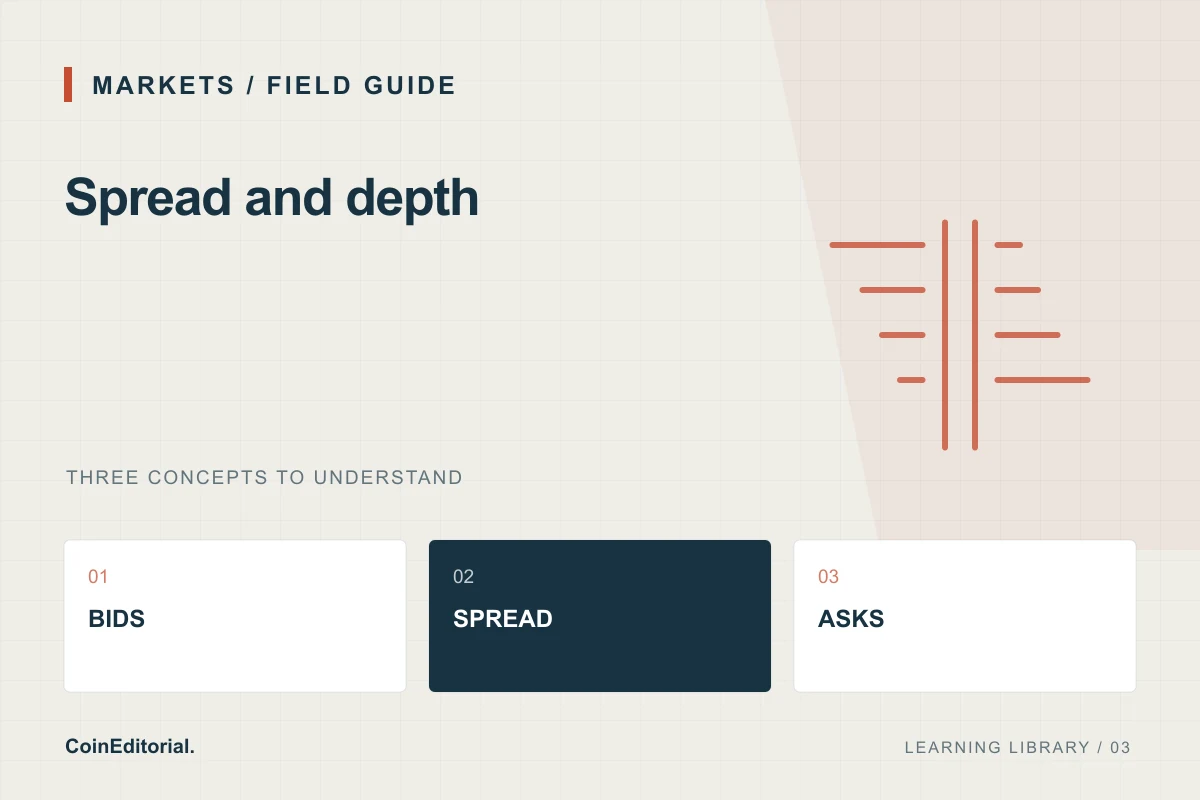
The best displayed price may only be available for a small amount.
Two sides of a market
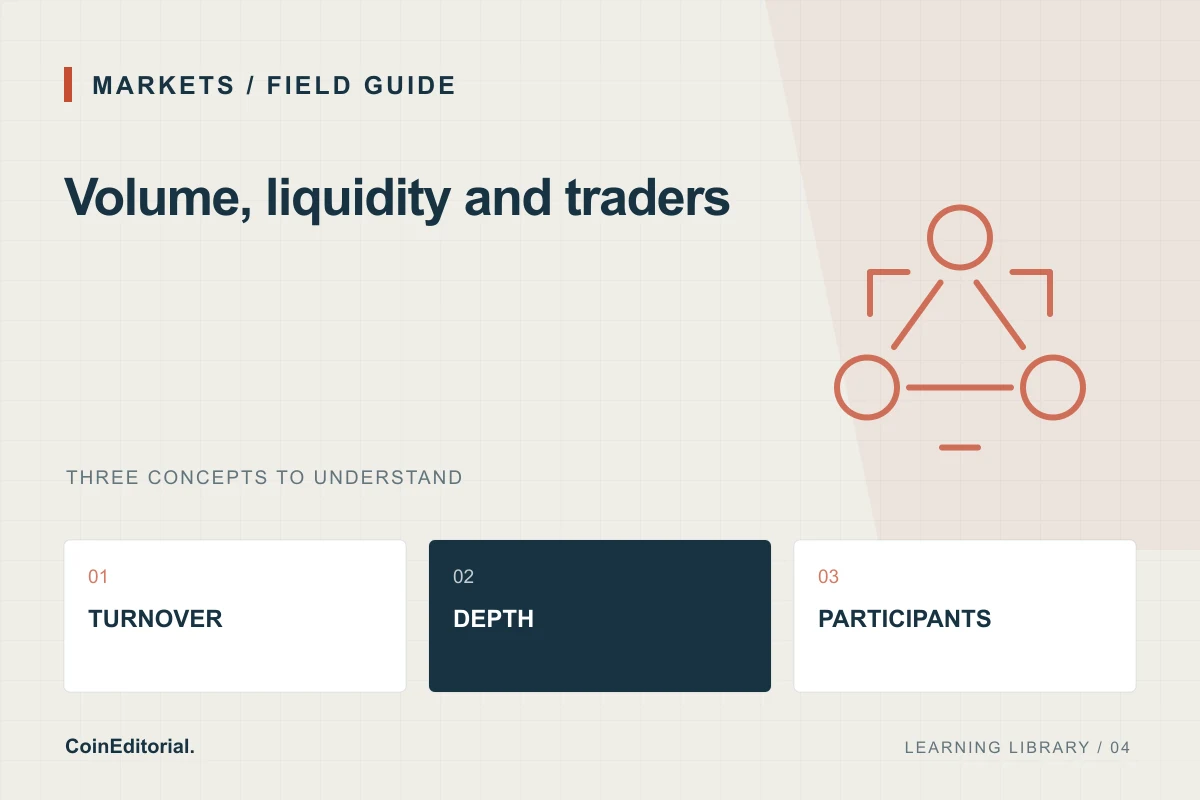
An order book lists buying interest as bids and selling interest as asks. The difference between the best bid and best ask is the spread. Depth describes the quantities available across price levels. Kraken exposes aggregated levels through its order-book endpoint; aggregation is important because a displayed level need not correspond to one participant or one individual order.
A larger order walks the book
Suppose a fictional market offers two units at $10 and three more at $11. Buying five units against that snapshot costs $53 before fees, averaging $10.60, not $10. A last-traded price of $9.90 would not make the five-unit purchase available at $9.90. This simplified arithmetic assumes those orders remain present and no other participant trades first.
Displayed depth can change
Resting orders may be amended, cancelled or filled before your transaction reaches the matching engine. A limit order places a boundary on price but may remain unfilled; a market order prioritises immediate matching against available interest. Venue-specific controls matter. A screenshot is therefore a historical observation, not a reservation of liquidity or a promise from the market to honour it later.
Compare execution, not presentation
When evaluating a venue, compare the same hypothetical order size at the same time, including fees. Inspect both sides of the market rather than measuring buying alone. Note whether the asset can actually be deposited and withdrawn on your network. This separates three different issues: an attractive headline quote, sufficient executable depth, and a usable route into or out of the venue.
Sources & further reading
Sources checked 7 October 2026. Source-linked explanatory content; not personalised investment advice. Found an error? Request a correction.