 TOP STORY 01 / 49
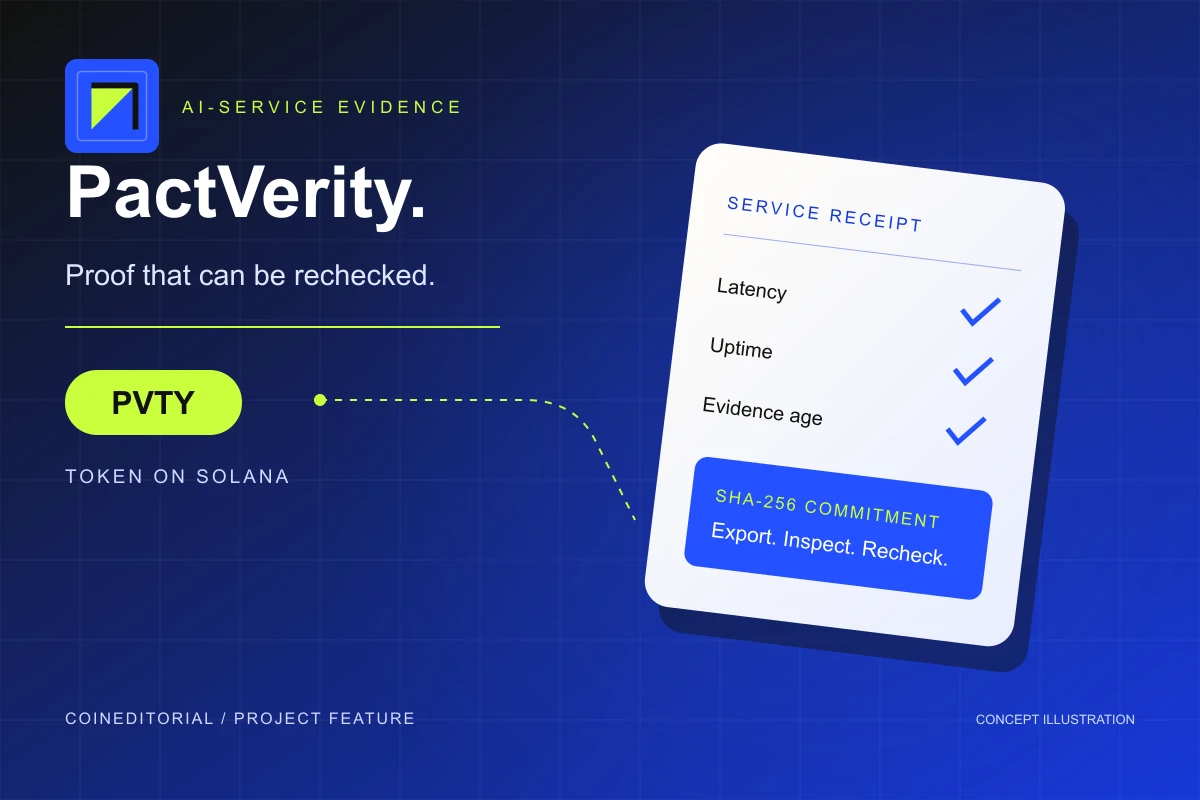
PactVerity & PVTY: evidence for the AI-service economy
Meet the project turning measurable AI-service claims into recheckable receipts—and explore PVTY, its Solana token, through the published evidence.
TOP STORY 01 / 49Meet the project turning measurable AI-service claims into recheckable receipts—and explore PVTY, its Solana token, through the published evidence.
The Foundation’s new DvP program targets simultaneous asset and payment exchange, with important limits on what the announcement establishes.
A new research post examines transaction assertions: checks on the final outcome, rather than the signature alone.
The Ethereum Foundation describes a system that separates API billing from identity, while acknowledging the privacy limits of prompts and network traffic.
A newly announced collaboration focuses on evaluating stablecoin payments alongside institutions’ existing payment infrastructure.
Price is the headline. Liquidity, supply and execution tell the rest of the story. A practical framework for reading a token market.
From a signed transaction to a confirmed block: the difference between a wallet balance, an address and settlement.
Solo validators, pooled staking and liquid staking are different arrangements. Here are the questions that matter.
Understand base fees, compute budgets and priority fees without confusing faster scheduling with guaranteed execution.
Reserve disclosures, redemption eligibility and secondary-market liquidity each answer a different question about a stablecoin.
How to evaluate lock scope, expiry and pool identity without mistaking a lock badge for protection against every token risk.
A practical way to separate a recorded claim, an integrity check and independently reproduced evidence in AI systems.
Layer 2 networks can reduce costs, but bridges, withdrawal paths and trust assumptions deserve their own checks.
Learn open, high, low and close, why unfinished candles change, and what a chart cannot tell you about buyers.
Understand circulating supply, total supply and maximum supply with a simple valuation example.
Read bids, asks and order-book depth using an example that explains why larger orders execute differently.
A busy chart does not automatically mean deep liquidity or a large community. Learn how to separate the signals.
Separate asset deposits, price changes and counting methodology when reading total value locked.
Cliffs, linear vesting and beneficiary rights explain more than an isolated unlock headline.
Understand inputs, outputs and change without mistaking your wallet’s own address for an extra recipient.
Learn fee rates, virtual size and why a large-value payment need not cost more than a small one.
What changes at a halving, what stays unchanged, and why issuance is different from market demand.
Learn who proposes blocks, who verifies rules and why running a node does not automatically earn bitcoin.
Separate a wallet app, a signing device, a recovery backup and a custodial account before you need to recover access.
Understand how Lightning differs from an on-chain Bitcoin payment and why a funded wallet can still face routing limits.
Learn what an explorer exposes, what address reuse reveals and why a wallet label is not definitive identity proof.
A practical guide to gas units, base fees, priority fees and the maximum fee shown in a wallet.
Why a familiar ticker is not proof of authenticity, and how raw balances become the number shown in a wallet.
Understand execution rules, upgrade controls and the difference between published code and reviewed behaviour.
Learn why data sources, update rules and stale-value handling matter as much as a price number.
Understand the economic consequences of ordering without confusing every bad execution with an attack.
Learn how state is stored and why an account-funding amount is different from a transaction fee.
A clear guide to supply records and control permissions behind an SPL token.
Learn why submission, network confirmation and successful instructions are three separate checks.
Understand the infrastructure between a wallet interface and blockchain state, including rate limits and stale observations.
Understand executable programs, upgrade rights and the evidence needed to connect reviewed code to a deployment.
Transfer fees, hooks and other extensions can affect integrations even when a wallet recognises the token.
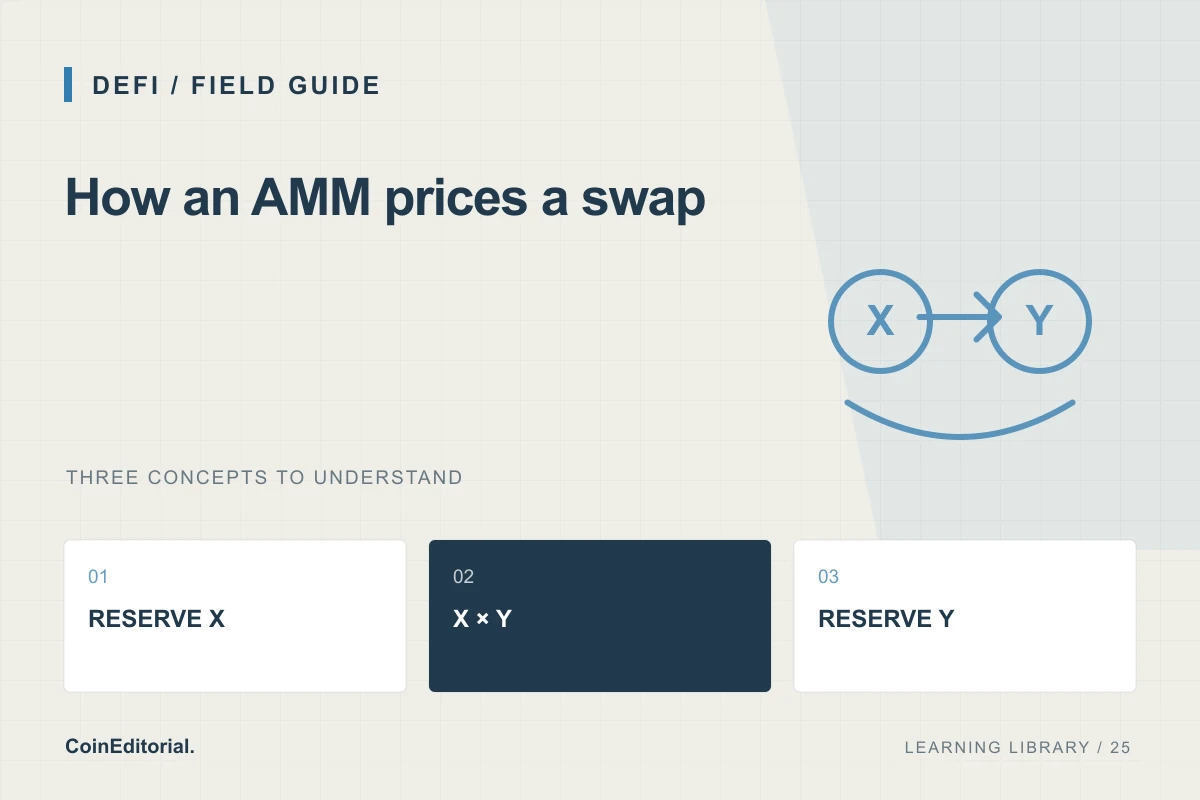
Use a simple constant-product model to understand why each additional token can cost more than the last.
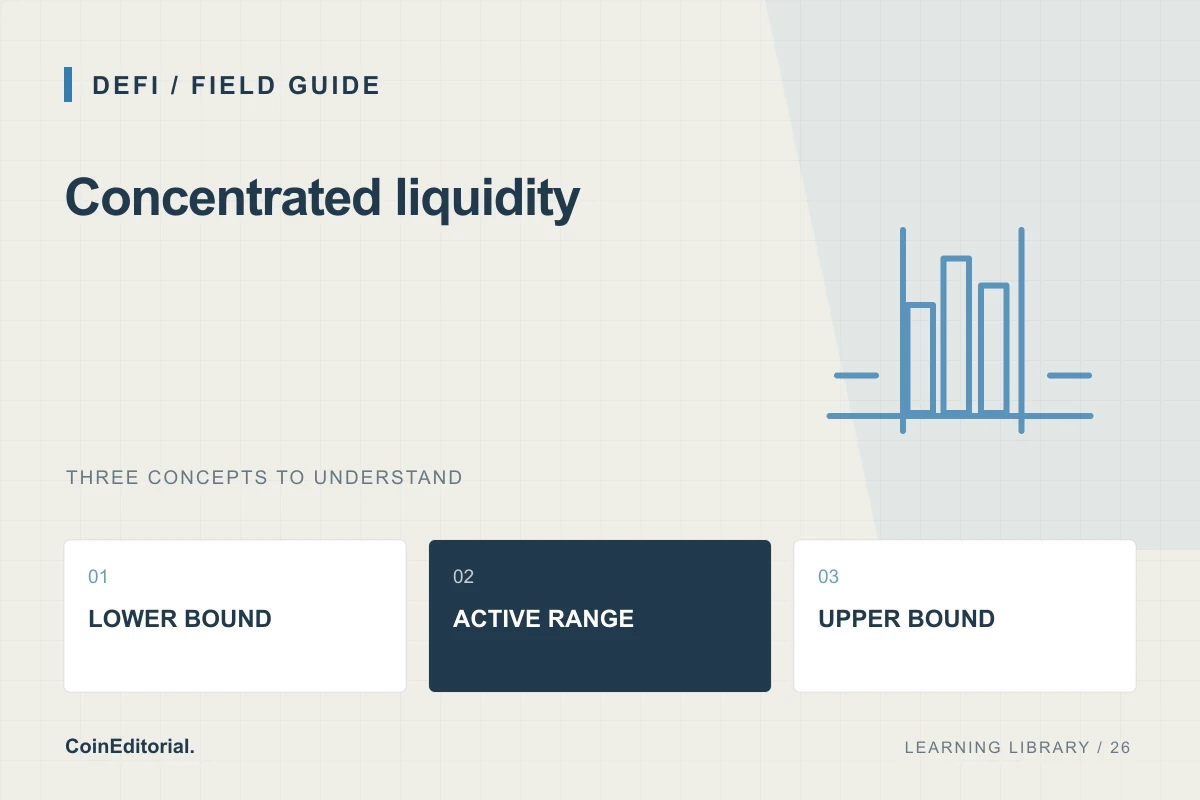
Learn active price ranges, one-sided positions and why total liquidity is not the same as liquidity near the market.
A numerical example separates pool value, trading fees and the alternative of retaining the original assets.
Understand borrowing capacity and liquidation with a simple example, without treating a displayed limit as a sensible target.
Understand allowances, spender addresses and why disconnecting a website may not remove an on-chain permission.
Separate interest, trading fees and incentive emissions before comparing annualised rates.
Distinguish file integrity, signer identity and the truth of a recorded observation.
Why a document, website or tool result must not become authority to move money or disclose secrets.
Dataset versions, failure cases and real-world conditions matter more than one impressive score.
Separate recommendations, transaction preparation and signing so software cannot spend beyond its actual mandate.
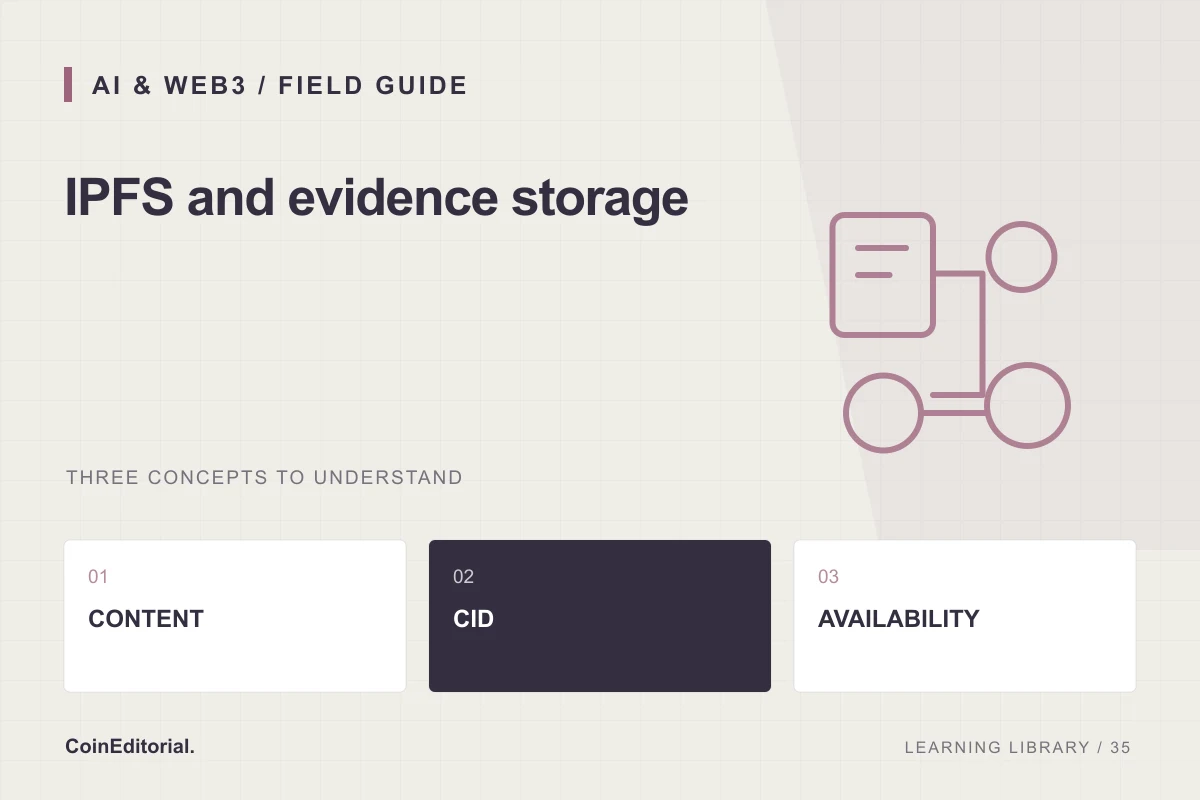
Understand content addressing, pinning and the difference between integrity and continued availability.
Retrieval can improve grounding, but a link must actually support the claim beside it.
No stories in this category yet.
Follow our source-linked news briefs and explainers in your favourite RSS reader. No algorithm. No inbox overload.
From a signed transaction to a confirmed block: the difference between a wallet balance, an address and settlement.
How to evaluate lock scope, expiry and pool identity without mistaking a lock badge for protection against every token risk.
Understand base fees, compute budgets and priority fees without confusing faster scheduling with guaranteed execution.