
Stablecoins: reserves are only half the question
Reserve disclosures, redemption eligibility and secondary-market liquidity each answer a different question about a stablecoin.
Decentralised finance describes mechanisms, not a single risk profile. A lending position, an AMM pool and a bridge have different failure modes. Follow the mechanics of a swap, examine who can change a contract, and understand how prices or collateral can affect a position.
8 articles · Source-linked news and practical learning guides
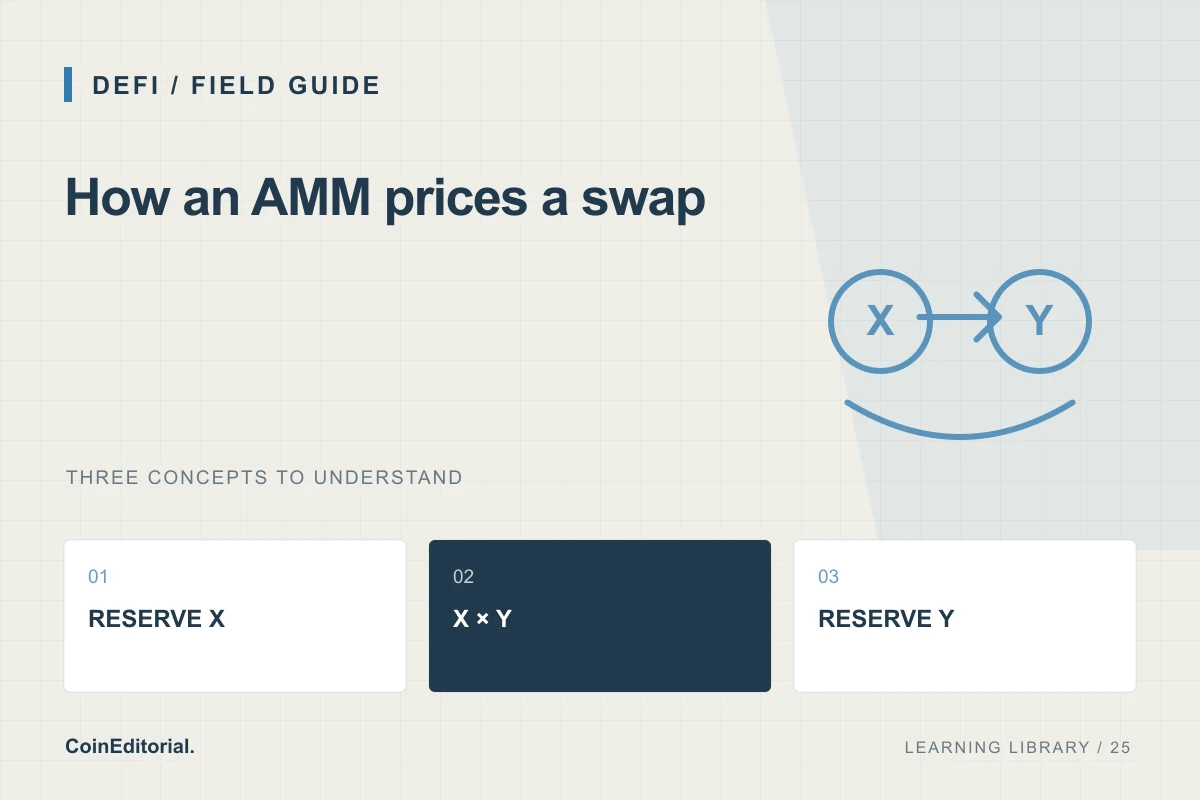
Use a simple constant-product model to understand why each additional token can cost more than the last.
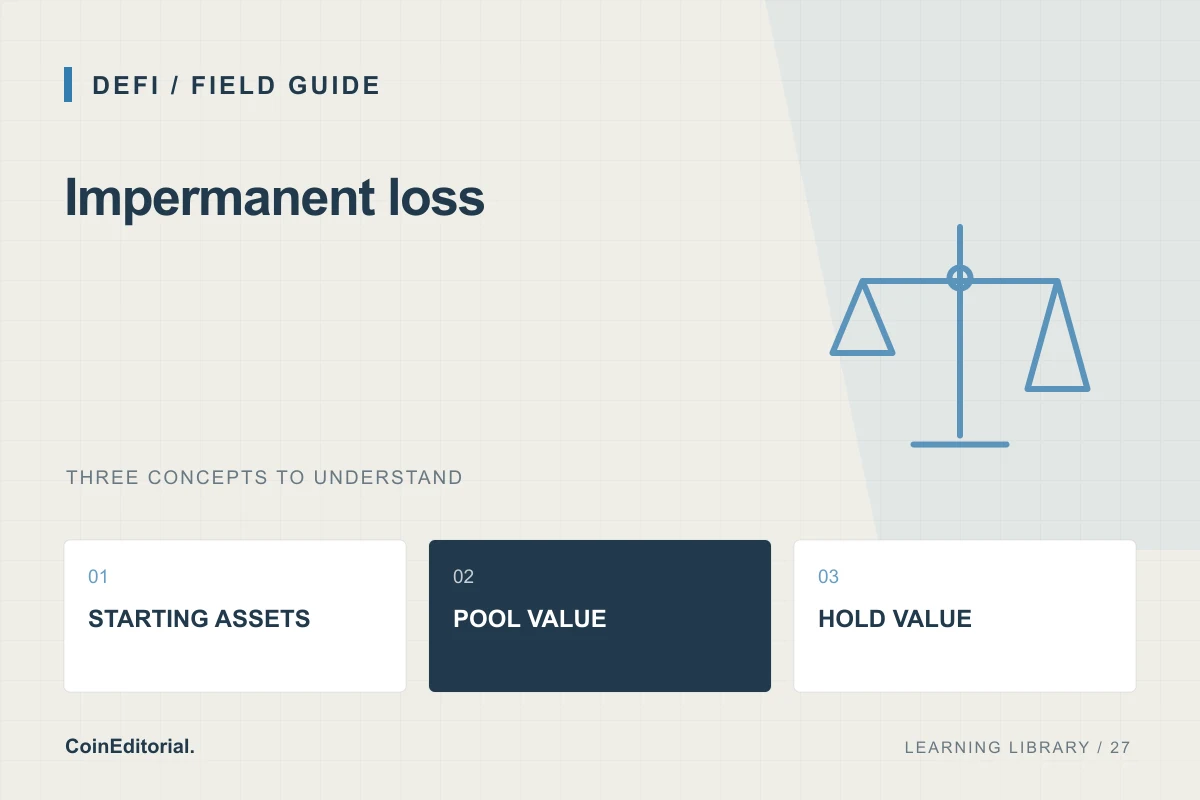
A numerical example separates pool value, trading fees and the alternative of retaining the original assets.
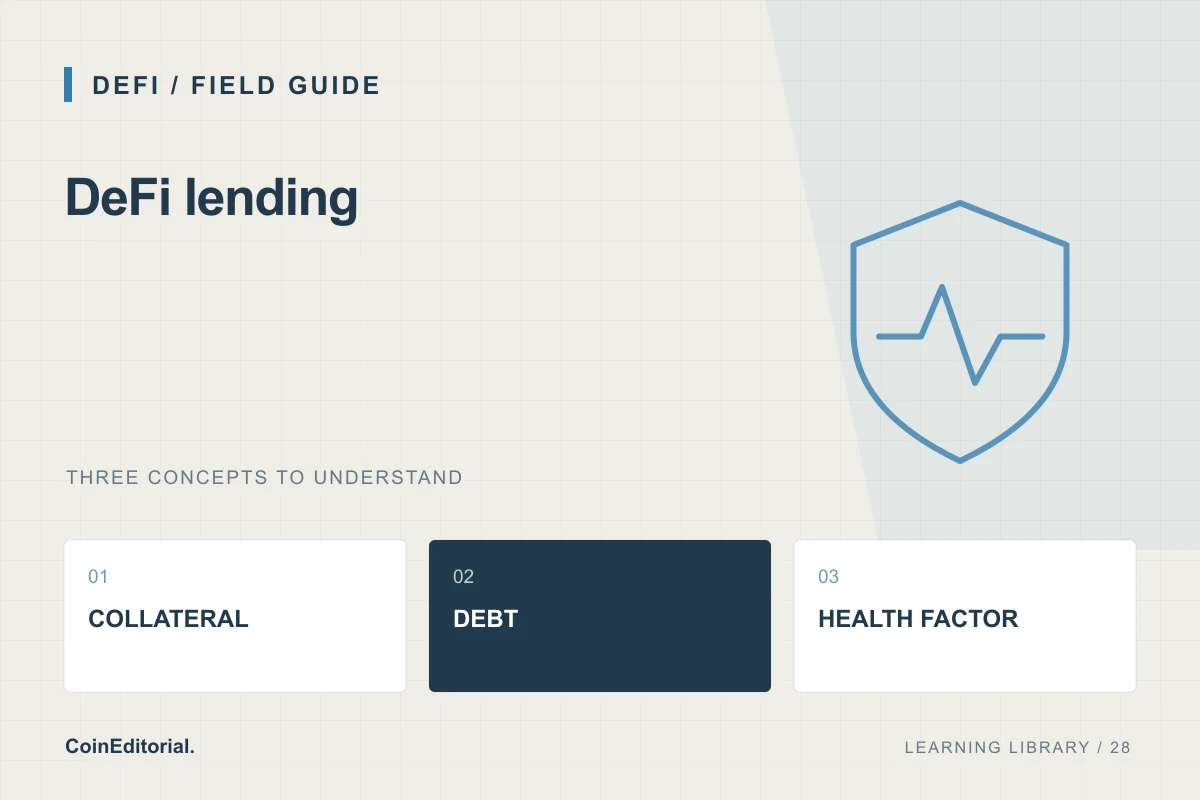
Understand borrowing capacity and liquidation with a simple example, without treating a displayed limit as a sensible target.
Reserve disclosures, redemption eligibility and secondary-market liquidity each answer a different question about a stablecoin.
How to evaluate lock scope, expiry and pool identity without mistaking a lock badge for protection against every token risk.
Use a simple constant-product model to understand why each additional token can cost more than the last.
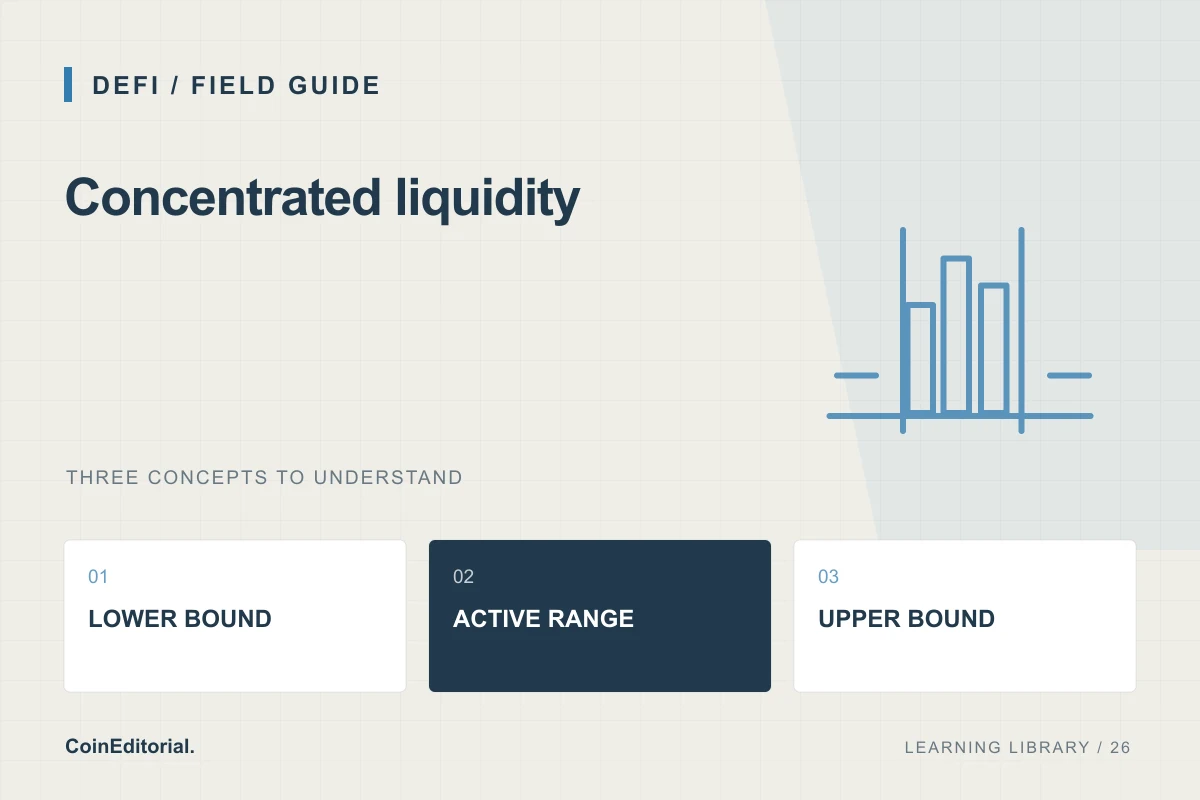
Learn active price ranges, one-sided positions and why total liquidity is not the same as liquidity near the market.
A numerical example separates pool value, trading fees and the alternative of retaining the original assets.
Understand borrowing capacity and liquidation with a simple example, without treating a displayed limit as a sensible target.
Understand allowances, spender addresses and why disconnecting a website may not remove an on-chain permission.
Separate interest, trading fees and incentive emissions before comparing annualised rates.
News briefs link to primary announcements and distinguish the source event date from our publication date. Explainers provide lasting context. This is an edited collection, not an automatic news feed.
How we work →Follow our source-linked news briefs and explainers in your favourite RSS reader. No algorithm. No inbox overload.
Daily news desk
What changed, why it matters, and what the original sources actually say. Each briefing keeps its real publication and event dates.
CFTC staff says bitcoin, ether and qualifying payment stablecoins may count toward operating-resource requirements for regulated venues, but not their mandatory liquidity floors.
Source-linked · AI-assisted briefingIOSCO’s 2026 monitoring report finds tokenized real-world assets more than doubled in a year, while secondary liquidity, investor rights and cross-border oversight remain unresolved.
Source-linked · AI-assisted briefingThe SEC staff position applies Canton’s network design to one defined minting model; changed facts could change the result.
Source-linked · AI-assisted briefingA 9.5-hour burst of withdrawals was material but not a run; the next test is whether access, reserves and institutional liquidity normalise.
Source-linked · AI-assisted briefingUber tested a 24/7 corporate-treasury workflow linking HSBC tokenized deposits with Franklin Templeton money-market-fund shares, but the participants disclosed no transaction size or commercial launch date.
Source-linked · AI-assisted briefingBinance says a cross-chain security breach affected about $6.3 billion and forced a temporary withdrawal halt, while analysts assess what the incident means for exchange reserves, liquidity and counterparty risk.
Source-linked · AI-assisted briefingBrowse the complete daily archive → · Follow new stories with RSS