A citation is a route to evidence, not a substitute for reading it.
What retrieval adds
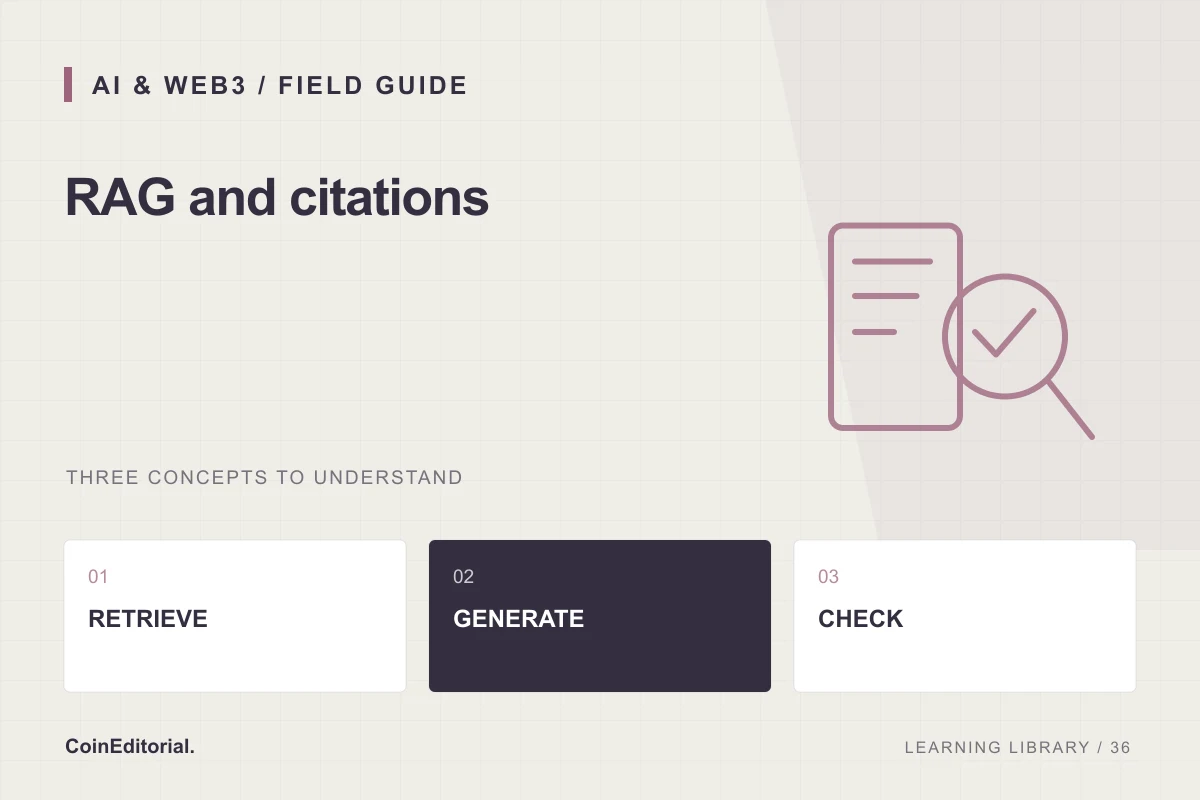
Retrieval-augmented generation combines a language-generation system with access to external material. The original RAG research explored combining model parameters with retrieved passages for knowledge-intensive tasks. The architecture helps explain how an answer can draw on material beyond what is stored in model weights. It does not make every retrieved source reliable or every resulting sentence correct.
A simple attribution failure
Imagine an AI answer claiming that a protocol has completed an independent audit, then citing a page that only announces a future review. The link exists and may be relevant to the topic, but it does not support the completed-audit claim. Checking the relationship between sentence and evidence is therefore necessary even when an interface displays professional-looking citations.
Dates and versions change meaning
A source may describe an older deployment or a limited experiment. A generated answer can accidentally generalise it to the current system. For technical subjects, retain the source date, product version and scope. Distinguish a vendor’s assertion from independent testing. If the evidence supports only a proposal, the answer should say proposal rather than upgrading it to a working integration.
A reader’s verification workflow
Open the cited source, locate the relevant passage and restate what it actually establishes. Check whether important qualifications were omitted. Prefer primary documentation for implementation details and independent evidence for claims of external validation. If the source is unavailable, mark that limitation. In crypto research, this small discipline can prevent a chain of summaries from turning an unverified claim into apparent consensus.
Sources & further reading
Sources checked 7 October 2026. Source-linked explanatory content; not personalised investment advice. Found an error? Request a correction.