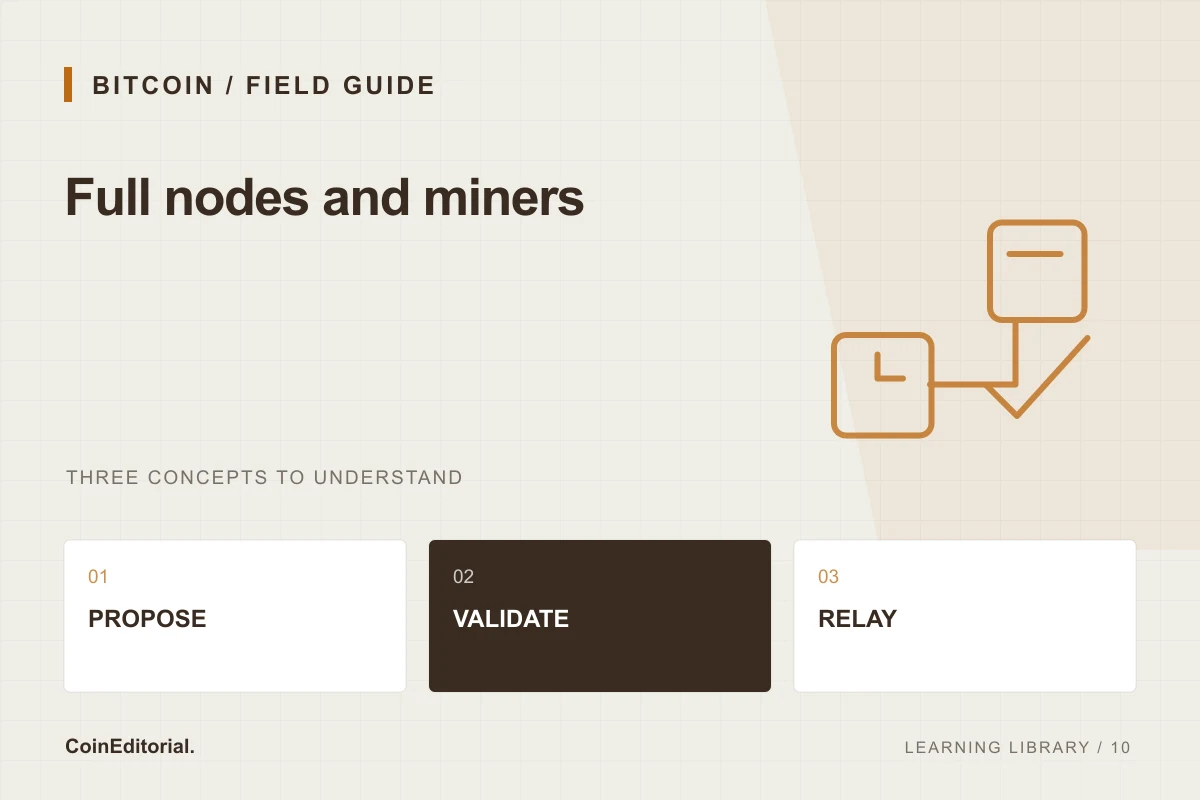
Validation and block production are separate responsibilities.
Two jobs, not one
Miners compete to produce blocks using proof of work. Full nodes independently check received blocks and transactions against their rules. A node is not obliged to accept an invalid block simply because a miner spent substantial resources producing it. Bitcoin Core’s validation documentation explains why independently checking the ledger differs from trusting another service’s report about it.
Think like an accountant and a publisher
An analogy is useful, though incomplete: a publisher proposes a new page, while an accountant checks that every entry follows the agreed rules. Printing a page does not force the accountant to approve it. Similarly, installing a node does not turn a laptop into a competitive mining operation or create an automatic stream of rewards for remaining connected.
The operational trade-off
Operating a node involves software maintenance, storage, bandwidth and reliable access to data. The benefit is greater control over verification, not a guaranteed financial return. A wallet must actually use the node for relevant checks to gain that benefit. Merely running software on one machine while a wallet continues to query a third-party server does not make the wallet’s information independent.
Questions before you start
What do you want to verify? Will your wallet connect to the node? Can you keep the software updated and protect the machine? Consult current hardware and installation requirements rather than copying an old equipment list. For a learner, distinguishing validation from mining is already valuable: it makes discussions about consensus, decentralisation and network participation much less confusing.
Sources & further reading
Sources checked 7 October 2026. Source-linked explanatory content; not personalised investment advice. Found an error? Request a correction.