Payment capacity depends on usable channels and direction, not only a displayed balance.
A payment network above the base chain
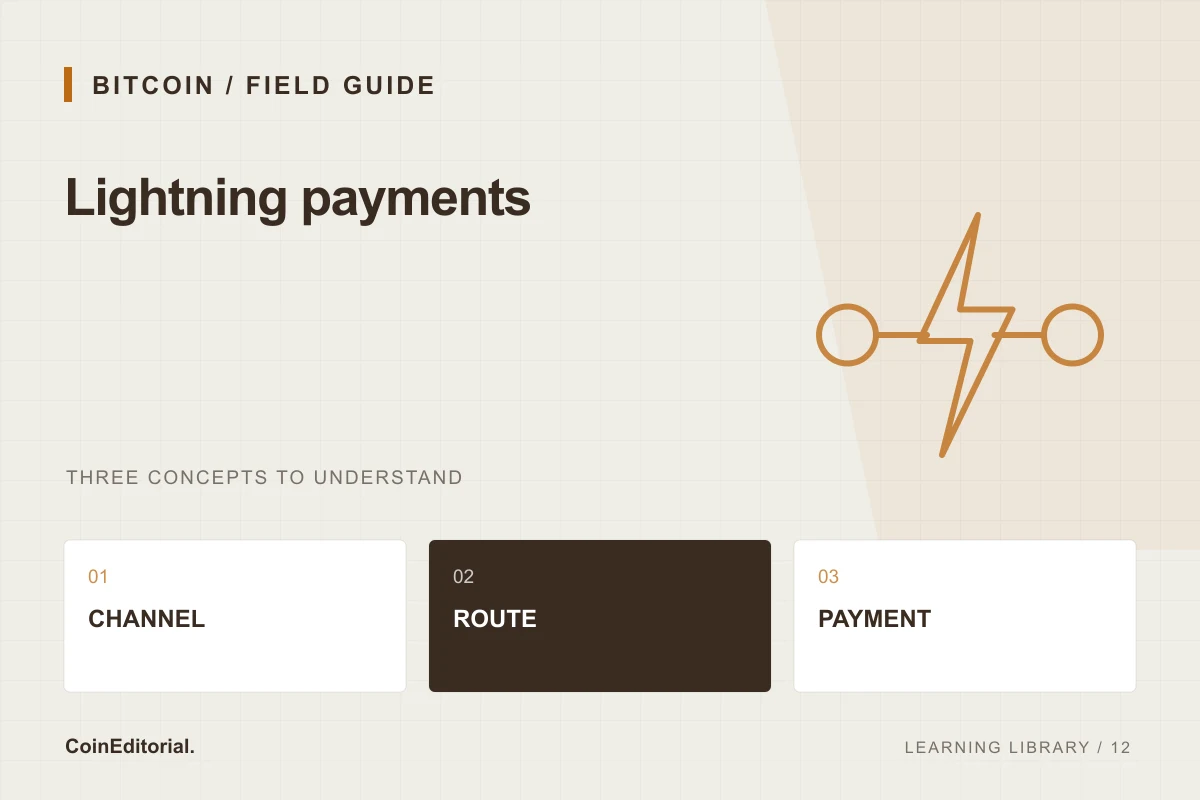
Lightning uses payment channels and routed payments to support bitcoin transfers without placing every payment directly into a base-layer block. Channel funding and closing connect the system to Bitcoin. Lightning Labs’ overview explains this layered model. It does not mean that all costs, operational responsibilities or trust assumptions disappear; the wallet’s implementation still matters.
Direction makes a difference
For a simplified illustration, imagine a channel with ten units of capacity but eight allocated to one side and two to the other. The ability to send in each direction is not identical. A route spanning several channels needs suitable capacity along that route. This is why a total balance alone cannot establish that any chosen payment amount will reach any recipient immediately.
Wallet products are not interchangeable
Some wallets leave key control and channel management with the user; others rely on a service, and some involve additional arrangements. Read the custody description, backup instructions and fee presentation. An on-chain address and a Lightning payment request are not interchangeable destinations. Check what the receiving application expects rather than assuming every item labelled bitcoin uses the same payment workflow.
What to do when a payment fails
Inspect the wallet’s reported reason, invoice status and any expiry. Do not assume failure means money has vanished or that a second unrelated transfer is needed. Keep the payment record and consult official documentation. For a merchant, test invoicing, reconciliation and refunds with a controlled process before relying on the system in production. This is operational education, not a recommendation of a wallet provider.
Sources & further reading
Sources checked 7 October 2026. Source-linked explanatory content; not personalised investment advice. Found an error? Request a correction.