A mint address identifies the asset; a token account records a holding.
Three objects to distinguish
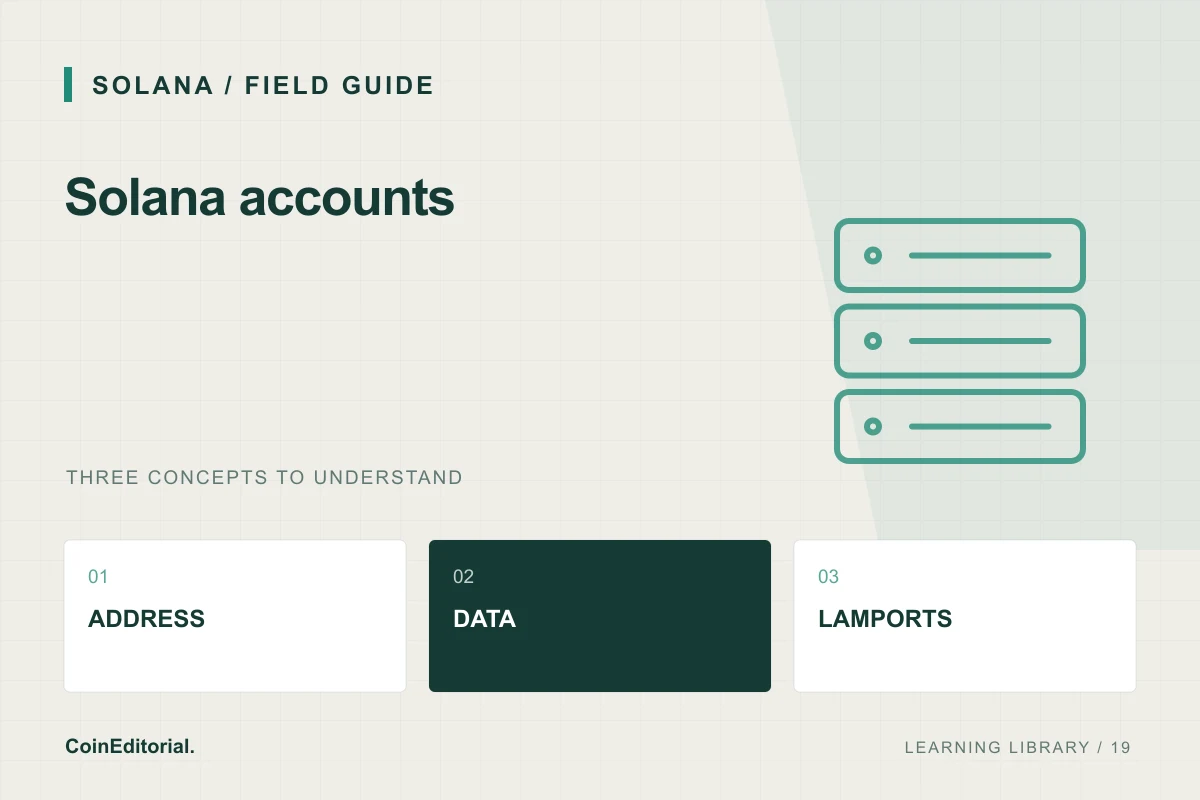
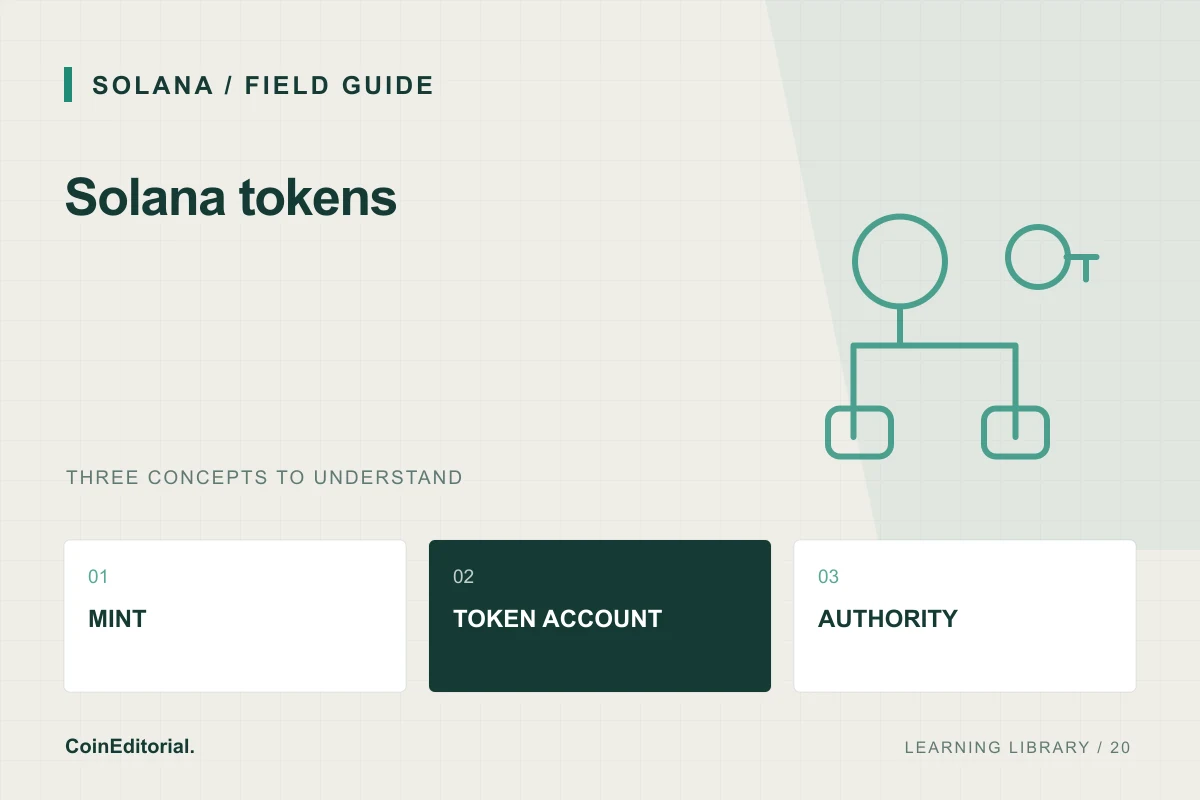
A mint account records information about a token, including supply and decimals. Token accounts hold balances associated with a mint and owner. Authorities control specific operations under the relevant token program. Solana’s token documentation separates these concepts. A wallet address, a pool address and a mint address are not interchangeable even when a website shows all three near the same logo.
Understand the scope of a permission
A mint authority concerns additional issuance; a freeze authority concerns supported freezing operations. Removing one authority does not automatically remove every possible control or dependency. Token-program version and extensions can add further behaviour. Evaluate the specific asset rather than treating one green check in a tracker as a complete technical review.
An example of an identity mistake
Suppose someone pastes a liquidity-pool address into a search field expecting the token mint. A data service may return nothing or a different type of record. Repeating the search does not fix the underlying mismatch. Trace the official mint into the pool’s asset records and confirm the same mint in the wallet or application before interpreting the result.
Keep a compact evidence record
Save the network, mint, token program, decimals, observed supply and current authorities with a timestamp. Separate on-chain observations from a project’s stated future policy. A supply snapshot does not establish who controls every holder address, and revoked issuance does not prove demand or decentralised ownership. Each conclusion should have a matching piece of evidence rather than borrowing certainty from an unrelated property.
Sources & further reading
Sources checked 7 October 2026. Source-linked explanatory content; not personalised investment advice. Found an error? Request a correction.