A transaction identifier is a reference to investigate, not proof the intended action succeeded.
Start with the application outcome
A wallet or service can report a transaction signature after submission. That is not the end of verification. The transaction may fail to land, return an execution error or reach a different confirmation stage than the application requires. Solana documentation explains both transaction structure and commitment levels. A sound interface distinguishes network progress from the success of the requested operation.
Commitment is a confidence setting
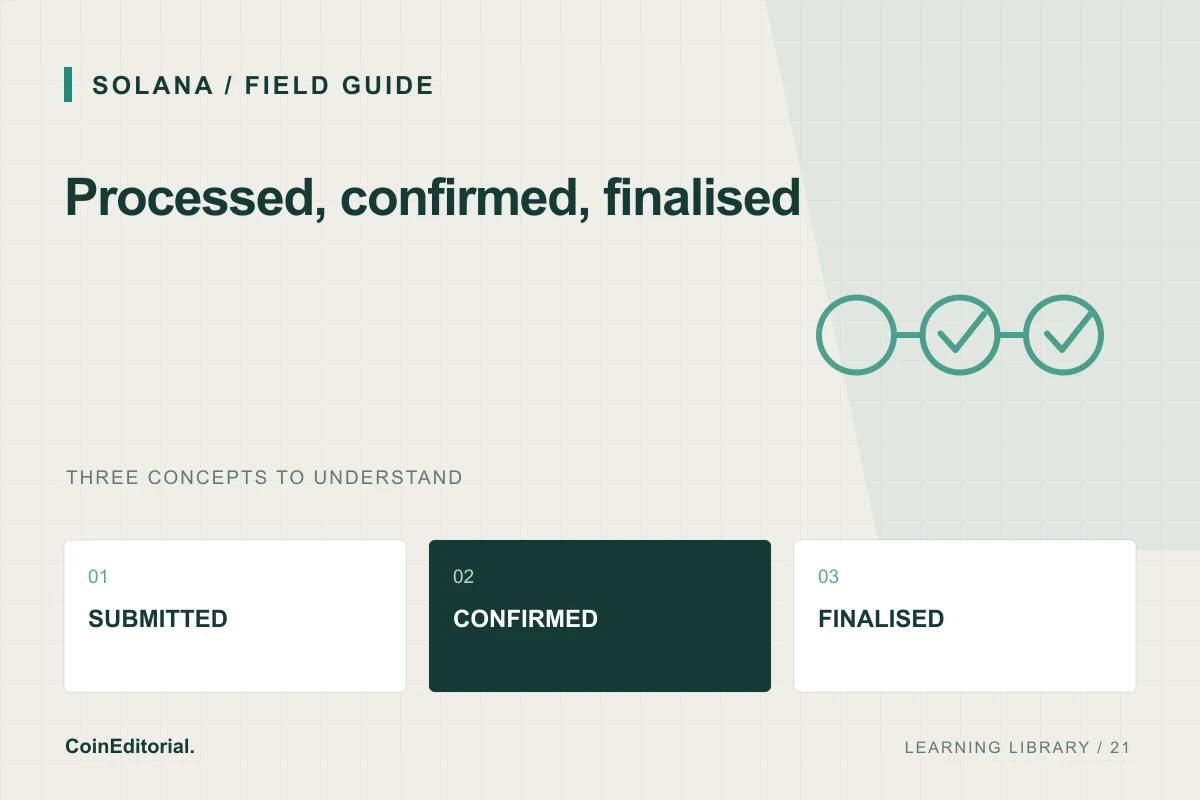
Processed, confirmed and finalised describe different levels of network commitment. A fast display may use a less settled view than a backend performing reconciliation. Differences between two screens can therefore reflect their chosen settings, not necessarily a missing payment. Record the commitment and observation time before comparing results returned by separate services.
A fictional reconciliation exercise
Imagine a swap interface says “sent”, while an explorer shows a confirmed transaction with an instruction error. The intended swap did not succeed merely because the transaction was recorded. Compare the pre- and post-balances and inspect the error. A fee can still be relevant. This distinguishes an execution failure from a successful swap whose interface has not refreshed its displayed balance.
Investigate before repeating
Keep the original signature and check status through a trusted endpoint or explorer. Review the error, quote age and expiry conditions before building another transaction. For software, use a clear reconciliation policy so an uncertain result does not trigger an unintended duplicate action. For readers, the essential habit is simple: check status and outcome separately instead of treating a spinner, a signature and settlement as synonyms.
Sources & further reading
Sources checked 7 October 2026. Source-linked explanatory content; not personalised investment advice. Found an error? Request a correction.